
How Graphic Design Is Powering the Future of Digital Brands
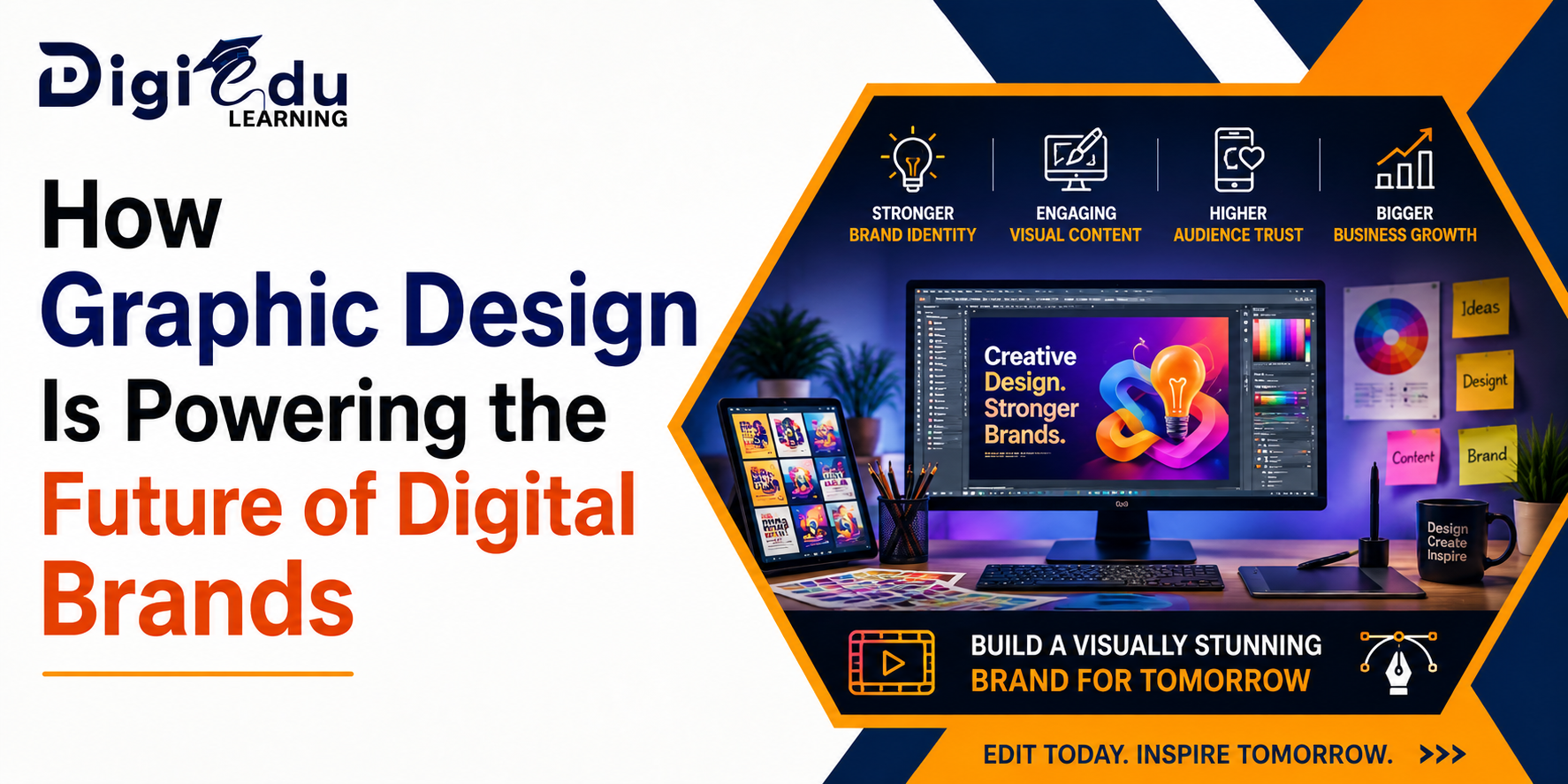
The Importance of Visual Identity in Modern Businesses
A consumer will find a brand from a post on social media, from the website, an ad, a presentation, or simply from searching for something on the internet. Without even reading the words, they already have an impression formed by what they have seen.
This is where graphic design is no longer only about creation. In a digital-first approach to running a business, design affects the way people comprehend the brand, trust it, and keep it in mind once the screen goes away.
Poorly executed visual identity might make an otherwise professional company look like it belongs to the previous era. Proper visual identity might convey credibility in seconds.
In today’s world, it makes a difference.
The Evolution of Graphic Design in the Future of Digital Branding
Digital brands do not have one logo and business card anymore. They can be found on websites, social media sites, search campaigns, email marketing campaigns, videos, mobile applications, advertisements, and AI interfaces.
Consistency in the visuals is now key.
Modern graphic design brings various digital channels together in order for customers to be able to identify a brand wherever it occurs. Various colors, typography, images, layouts, icons, illustrations, etc. form the visual language of a brand.
It becomes clear that the duties of a designer have evolved. Not only do they create appealing graphics, but they also enable a company to communicate efficiently in a limited environment.
Why Good Design Can Influence Customer Decisions
People do not interact with digital brands in the same way they interact with physical stores. Online, the visual experience often becomes the first point of contact.
Consider a customer visiting two websites offering similar services. One has confusing layouts, inconsistent colours, low-quality images, and difficult navigation. The other presents information clearly with a professional and consistent visual system.
Even before comparing prices or features, the second business may appear more credible.
Effective graphic design supports this experience by making information easier to process and creating visual cues that guide users toward important actions.
This does not mean design alone determines whether someone purchases. Product quality, pricing, service, reputation, and user experience remain important. But design can influence the first impression and reduce friction during the customer journey.
The Growing Role of Graphic Design in Social Media Content
Social media has transformed how brands communicate with audiences. Businesses now need a continuous stream of visual content rather than occasional promotional material.
Posts, carousels, advertisements, thumbnails, reels, infographics, stories, and campaign creatives all require visual thinking.
This is creating demand for designers who understand both creativity and digital communication.
A successful social media visual is not simply attractive. It needs to communicate the central idea quickly, work within platform-specific formats, support the brand identity, and encourage the viewer to stop scrolling.
That is why modern graphic design increasingly overlaps with content strategy and digital marketing.
How AI Is Changing the Graphic Design Profession
Artificial intelligence is changing the creative workflow, but it does not eliminate the need for creative professionals.
AI tools can help designers generate concepts, explore variations, remove backgrounds, create initial visual directions, resize assets, and accelerate repetitive tasks. These capabilities can save time, particularly during early-stage ideation and production.
However, deciding what visual direction actually supports a brand still requires human judgement.
A designer needs to understand the audience, business objectives, cultural context, visual hierarchy, storytelling, and brand personality. Generating an image is different from developing an effective communication system.
The future is therefore likely to favour professionals who can combine graphic design skills with AI tools, rather than treating AI and design as competing disciplines.
What Skills Will Future Graphic Designers Need
The definition of a successful designer is becoming broader. Technical software knowledge remains important, but employers and clients increasingly benefit from designers who can think beyond individual assets.
Future-ready designers should understand areas such as:
- Visual identity and branding
- Typography and colour theory
- Social media design
- UI and digital interfaces
- Motion and basic video concepts
- Content creation
- User experience principles
- AI-assisted creative workflows
- Digital marketing fundamentals
- Creative problem-solving
The strongest professionals will not simply ask, “How should this look?”
They will ask, “What does the audience need to understand, feel, or do after seeing this?”
That shift from decoration to communication is one of the biggest changes taking place in the profession.
Graphic Design vs Traditional Design Thinking
Traditional design often focused heavily on creating a finished visual asset. Digital environments require a more flexible approach.
A single campaign may need a social media post, website banner, mobile creative, video thumbnail, advertisement, email graphic, and several variations for different audiences.
This requires designers to think in systems rather than isolated designs.
A strong visual identity provides rules and principles that allow different assets to look connected while still adapting to different platforms.
This is where strategic graphic design becomes particularly valuable for growing digital brands.
What Businesses Should Look for in Modern Graphic Design
Businesses investing in design should look beyond portfolios filled with visually impressive images.
The more important question is whether the designer understands the business objective behind the visual.
A good creative professional should be able to explain why a particular layout, colour combination, typography choice, or visual direction has been selected.
Businesses should consider whether the designer understands:
- Target audience behaviour
- Brand positioning
- Digital platforms
- Content requirements
- User experience
- Marketing objectives
- Brand consistency
The best design is not necessarily the most complicated design. It is the one that communicates the right message to the right audience in the right context.
Why Graphic Design Can Be a Strong Career Choice
For creative individuals, the evolution of digital branding is creating opportunities across multiple industries.
Designers can work with agencies, technology companies, e-commerce brands, media organisations, startups, educational institutions, or as independent freelancers.
The increasing use of social media, digital advertising, video content, websites, mobile applications, and AI-powered creative tools means visual communication remains relevant across industries.
Students and aspiring designers who combine creative ability with practical digital skills can build a broader professional profile.
Learning graphic design today is therefore not simply about mastering design software. It is about understanding how visual communication supports modern businesses.
How Aspiring Designers Can Prepare for the Future
Someone entering the field should avoid focusing exclusively on software shortcuts or individual design trends.
Instead, build a portfolio that demonstrates thinking.
Create projects that show how you would develop a brand identity, design a social media campaign, create a website interface, communicate information through an infographic, or develop a digital advertising creative.
Experiment with AI tools, but learn to evaluate their output critically.
Most importantly, practise explaining your design decisions. Employers and clients want to know not only what you created but why you created it that way.
Closing Thoughts
The future of digital branding will not be shaped by technology alone. It will be shaped by how effectively businesses communicate through that technology.
Graphic design sits at the intersection of creativity, communication, branding, marketing, and digital experience. As brands compete across more platforms and audiences become more selective about where they give their attention, strong visual communication will continue to matter.
For aspiring designers, this creates an opportunity to build skills that go beyond software and templates. Learning design strategically, understanding digital platforms, and becoming comfortable with emerging AI tools can help prepare professionals for a rapidly changing creative industry.
At Digi Edu Learning, the focus is on helping students and professionals develop practical, industry-relevant digital skills that they can apply beyond the classroom. With the right guidance and hands-on learning, graphic design can become more than a creative talent—it can become a valuable professional capability for the future of digital business.
Popular News



Our Partners