



Why Content Distribution Matters More Than Content Creation in 2026
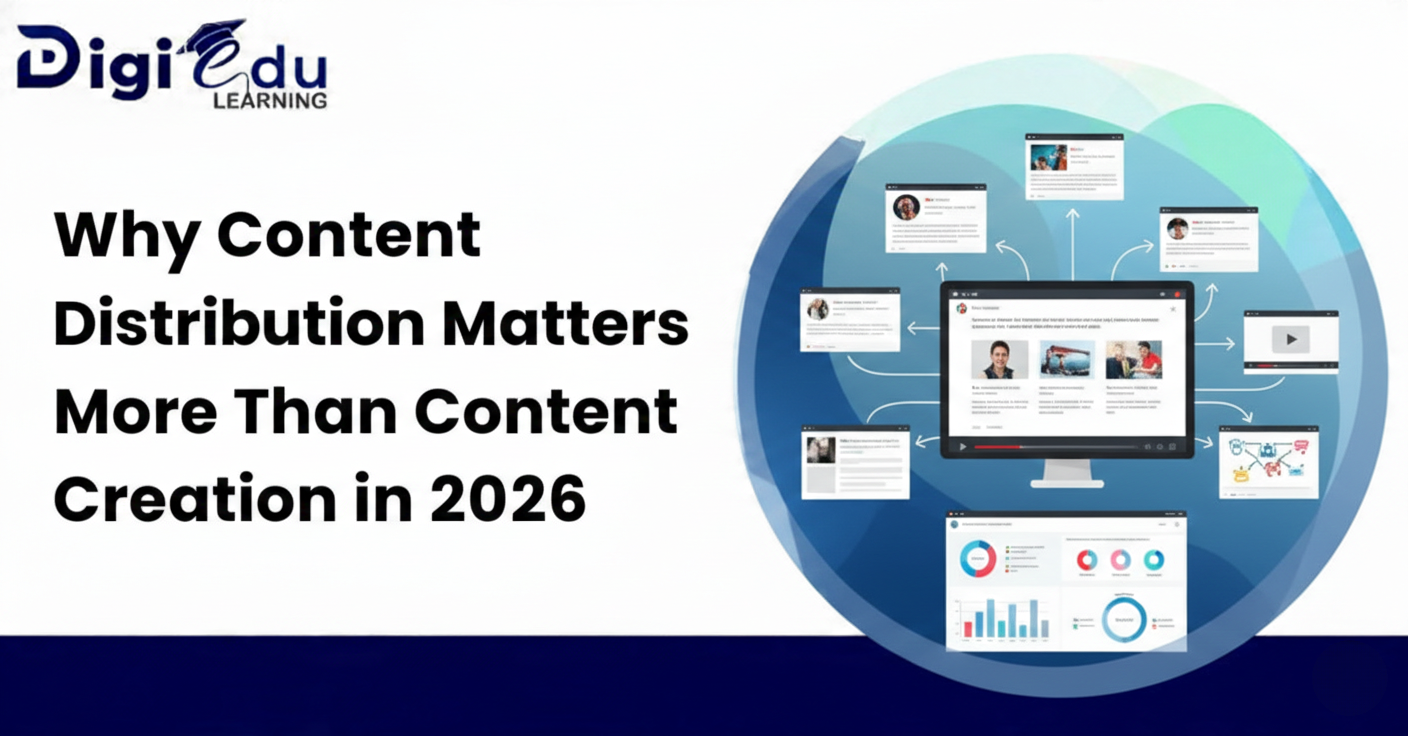
By 2026, it will not be the smartest content creator that will win the content marketing game, but the smartest content disseminator. At an all-time high, brands are creating blogs, videos, reels, podcasts, and newsletters; however, only a small percentage of the content reaches its intended audience. The internet is too saturated, attention spans are shorter, and algorithms are more relevant than voluminous. This has ensured that content distribution is a key determinant in marketing success. The effective content distribution strategy will ensure that even high-quality content is not lost in the noise and that it produces quantifiable business results.
From Content Creation to Content Visibility
Over the years, marketers had the notion that excellent content will automatically bring traffic. This assumption does not hold anymore in 2026. Search engines, social platforms, and paid channels are extremely competitive such that without a conscious effort to plan, visibility becomes very difficult. The gap between the creation and consumption can be bridged by a clear content distribution strategy that puts the content where the audience spends their time.
The Digital Content Overload Problem
All brands are releasing content every day, and this has contributed to the decreasing organic reach and engagement levels.
- Millions of blogs are being published daily.
- Reducing organic reach in social sites.
- More competition for the same audience.
Algorithm-First Platforms Control Visibility
Algorithms currently determine the level of visibility of content and not necessarily quality.
- Tendency to favor regular interaction.
- Advertisement affecting reach.
- Ranking factors of platforms.
Audience Fragmentation Across Channels
The audiences are distributed in various channels, and single-channel publishing cannot be successful.
- Professionals favoring LinkedIn and email
- Different content types on each channel.
- Multi-platform presence requirement.
Why Content Distribution Delivers Higher ROI Than Creation
Production of content takes time, energy, and money. This investment does not yield returns without good distribution. An integrated content distribution strategy has the greatest ROI potential due to the ability to increase the lifetime and reach of the content.
Maximizing the Value of Existing Content
A single piece of content can be recycled and shared on numerous platforms.
- Blogs were transformed into social posts.
- Reused videos in the form of short clips.
- Email sequence reports.
Better Lead Generation Opportunities
The distribution-based campaigns will see the content delivered through high-intent groups.
- Targeted paid promotion
- Organic discovery through SEO.
- Email and advertisement retargeting.
Content Distribution Channels That Matter in 2026
Contemporary marketers can no longer afford to use one platform. The best content distribution strategy incorporates owned, earned, and paid channels.
Owned Media Channels
These are platforms that are owned by the brand completely.
- Websites and blogs
- Email newsletters
- Mobile apps and communities
Earned Media Channels
The content becomes amplified through third-party platforms.
- Social media shares
- Influencer mentions
- PR coverage and backlinks
Paid Media Channels
Promotion using paid mechanisms guarantees a certain reach.
- Social media ads
- Native advertising
- Search engine marketing
How Smart Distribution Improves Content Performance
Distribution is not merely about posting content all over the place. It is the art of sharing wisely on the information of the audience and their actions. An evidence-based content distribution strategy
helps content to perform at par with content in other channels.
Targeting and Audience Segmentation
The various parts of the audience react to different kinds of platforms and formats.
- Individualized content delivery.
- Behavior-based targeting
- Platform-specific messaging
Time and Frequency Optimization
Making posts when the time is suitable makes things more engaging.
Best times, which are platform-specific.
- Avoiding content fatigue
- Regular but not obtrusive publication.
- Performance monitoring and maximization.
The distribution strategies are developed under the real-time information.
The Role of AI and Automation in Content Distribution
In 2026, AI will be an essential facilitator of effective content distribution. It saves labor and enhances accuracy, and content distribution strategy implementation is scalable.
Artificial Intelligence Recommendations.
AI proposes optimal platforms and formats for every piece of content.
- Platform choice intelligence.
- Format optimization recommendations.
- Anticipation engagement analysis.
Automated Scheduling and Publication.
With automation, there is uniformity of publishing without human intervention.
- Cross-platform scheduling
- Workflow automation
- Reduced operational load
Smart Performance Intelligence
AI technologies make raw data actionable.
- Forecasting content performance.
- Engagement trend analysis
- ROI-focused reporting
Common Content Distribution Mistakes to Avoid
Many brands continue to underutilise distribution in spite of its significance. These are the errors that should be avoided to make your content distribution strategy stronger.
Over-Reliance on Organic Reach
To rely on organic traffic is limiting in terms of scalability.
- Fading without sponsored distribution.
- Algorithm dependency
- Inconsistent results
Ignoring Post-Publishing Promotion
Promotion of content must not end with publishing.
- Constant amplification was needed.
- Re-targeting lost opportunities.
- Short content lifespan
Long-Term Business Impact of Content Distribution
Distribution-based marketing builds sustainable expansion that is not short-lived. Developed content distribution strategyhelps to maintain the brand authority, lead building, and revenue development.
Builds Cross-Channel Authority
Thought leadership is done through consistent distribution.
- Industry credibility
- Trust-building over time
- Strong digital presence
Strengthens the Conversion Funnel
The content goes to the users at various levels of purchasing.
- Sensitization via social media.
- Thinking through blogs and videos
- Email conversion and retargeting.
Reduces Platform Dependency
Multi-channel distribution cushions brands against algorithm changes.
- Platform risk mitigation
- Stable traffic sources
- Long-term resilience
Conclusion
Creation of content devoid of distribution in 2026 does not make it a sustainable marketing strategy. A well-designed content distribution strategy ensures that brands are more visible, engage better, and achieve better ROI on the same content strategy. Distribution converts content to a growth engine by enabling the delivery of the right content to the right people at the right time in the right medium. The art of planning, executing, and optimising distribution is now an essential marketing skill. Digi Edu Learning trains its marketers in the industry-based, pragmatic approach to master the contemporary content distribution strategy so that they can establish scalable, performance-orientated digital marketing profiles in 2026 and beyond.
8 responses to “Why Content Distribution Matters More Than Content Creation in 2026”
Leave a Reply
Popular News



Our Partners





I’ve tried a few sites lately but this one is definitely the smoothest. The login is fast and I love the game variety. Check out x777eelogin for a great experience!
The variety of games here is insane! I hit a decent win on my first try, which is pretty rare. Big thanks to area188slot for the awesome service.
Finally found a platform that actually understands the local market here. The deposits are fast and the odds are fair. Huge shoutout to ph1xbetphilippines!
Quick access and no glitches. It is refreshing to find a site that actually works properly on mobile. Keep it up vcv999login.
Heard Canohu3 is the spot. Trying it out this evening. Will give you a review. canohu3 gives you a shot.
Been playing here for a couple of weeks now and the experience has been great. Very stable connection and fair gameplay. Check out batak5dlogin
Best place for big wins. I love how easy it is to navigate the site on my phone. Check out phjilibet888 if you want some real action.
I really like the layout of this site and how intuitive it is for new players. I had a blast playing on br5542bet last weekend.