



7 Reasons Why Hands-On Projects Are the Future of Digital Marketing Training
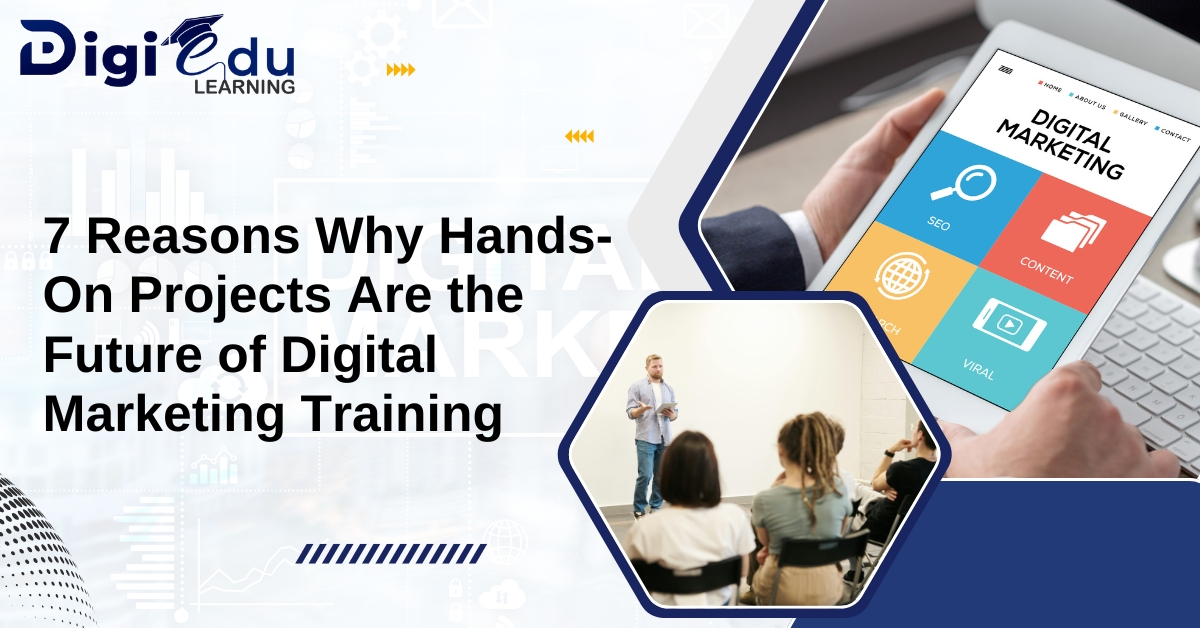
The digital marketing landscape in 2026 is fast, dynamic, and fiercely competitive. Employers no longer value just theoretical knowledge — they want professionals who can deliver real results from day one. This is why hands-on projects have become the backbone of modern digital marketing training. Instead of memorizing marketing jargon or watching endless slides, learners now gain skills by doing. Real-world projects give students the experience, confidence, and expertise that make them stand out in a crowded job market.
1. Bridging the Gap Between Theory and Practice
Textbook learning may explain what SEO or PPC is, but it rarely shows how these strategies work in the real world. Hands-on projects bridge this crucial gap. When students run actual campaigns, perform keyword research, design ads, or track metrics, they learn the logic behind each decision. This practical exposure helps them understand why something works — not just how. By applying theory to real-world scenarios, learners develop a problem-solving mindset that can’t be achieved through theory alone.
2. Building Real Industry Experience Before Graduation
One of the biggest challenges new marketers face is the “experience paradox.” Every company wants skilled candidates, but no one wants to hire someone without experience. Hands-on projects solve this issue. Students who complete practical assignments — such as managing a Google Ads campaign, creating a brand’s social media calendar, or optimizing website SEO — already have measurable results to show employers. This transforms them from learners into doers, giving them a portfolio that demonstrates their value from day one.
3. Enhancing Retention and Understanding of Concepts
Studies show that people retain 75% more knowledge when they learn by doing rather than by listening or reading. In digital marketing, where analytics, algorithms, and strategies are constantly evolving, hands-on learning ensures deeper understanding and long-term retention. For instance, when learners experiment with real campaign data, they grasp complex topics like conversion tracking, A/B testing, or audience segmentation much more effectively than through theory alone.
4. Fostering Creativity and Innovation
Digital marketing is as much about creativity as it is about analytics. Hands-on projects give learners the freedom to test ideas, experiment with designs, and develop unique campaign strategies. Whether it’s designing a new ad layout, crafting compelling content, or experimenting with influencer partnerships, students learn to innovate. Mistakes become learning opportunities, and every project fuels creativity. This ability to think outside the box is exactly what modern employers look for in digital marketers.

5. Exposure to Real Tools and Platforms
A digital marketer’s success depends heavily on their comfort with tools — from Google Analytics and SEMrush to Meta Ads Manager and HubSpot. Hands-on training exposes students to these tools in real-time. They don’t just watch tutorials; they actually use the software to manage data, set budgets, analyze reports, and optimize campaigns. By the time they complete their training, they can confidently navigate these professional platforms — something that gives them a significant edge during job interviews and internships.
6. Improving Collaboration and Communication Skills
In the professional world, digital marketing is a team effort. SEO specialists, content writers, designers, and analysts often work together on a single campaign. Hands-on projects replicate this team-based approach, encouraging students to collaborate, brainstorm ideas, and divide responsibilities. This builds not only technical expertise but also soft skills like communication, teamwork, and leadership. Such experiences make students better prepared for real-world corporate environments where collaboration drives success.
7. Creating a Strong Portfolio for Career Growth
A practical portfolio is often more valuable than a certificate. Hands-on projects allow students to create tangible proof of their skills — case studies, campaign reports, marketing strategies, and analytics dashboards. When applying for jobs or freelancing gigs, these project outcomes help employers visualize the candidate’s potential. A student who can showcase successful campaigns or improved engagement metrics instantly appears more credible and employable than one with just classroom knowledge.
Why Hands-On Learning Is the Future of Marketing Education
The traditional education system focused heavily on theory, but digital marketing moves too fast for static syllabuses. Hands-on learning keeps pace with the changing industry. As AI tools, automation, and data-driven marketing evolve, students need to continuously adapt — and project-based learning allows just that. Each project challenges learners to explore new trends, apply emerging tools, and evaluate real-world outcomes. This approach not only keeps learning relevant but also prepares students for the unpredictable future of marketing.
How Institutes Are Adopting Project-Based Learning
Leading digital marketing institutes in India and globally are now integrating 70–80% of their curriculum around live projects. Instead of teaching SEO as a chapter, they make students rank a website. Instead of explaining Google Ads theoretically, they let learners run real campaigns with allocated budgets. This model ensures that by the time students graduate, they have completed multiple campaigns across industries, making them confident and job-ready professionals.

The Role of Mentors in Hands-On Training
Even the best projects need expert guidance. In hands-on learning environments, mentors play a crucial role in reviewing work, analyzing data, and providing actionable feedback. They guide students through trial and error, helping them understand why a campaign succeeded or failed. This mentorship transforms hands-on learning into guided experience, ensuring learners not only execute tasks but also understand strategic reasoning behind every action.
The Future Job Market Perspective
By 2026, recruiters are prioritizing skills over degrees. Companies are looking for candidates who can execute digital campaigns, analyze performance metrics, and generate measurable results. Hands-on project experience serves as a proof of competence. It shows that the candidate has not only studied marketing but has also done marketing. As a result, hands-on learners are likely to command higher salaries, better roles, and faster career progression in the competitive digital industry.
Conclusion
The future of digital marketing training lies in experience-driven education. Hands-on projects don’t just teach students what digital marketing is — they show them how it works in the real world. They build confidence, creativity, and competence, turning learners into professionals ready to handle any marketing challenge.
For students who want to gain real-world experience and become industry-ready through live projects, Digi Edu Learning offers comprehensive, hands-on digital marketing training programs designed to prepare you for success in 2026 and beyond.
3 responses to “7 Reasons Why Hands-On Projects Are the Future of Digital Marketing Training”
Leave a Reply
Popular News



Our Partners





The gameplay is incredibly addictive and the rewards are actually attainable. I spent my whole weekend here and had a blast. Go visit arushokislot right now.
If you are looking for something reliable and fast, this is it. The payouts are processed quickly and the games are addictive. Check out ft999app
I’ve been using this app for a few weeks now and the interface is super smooth. Definitely one of the best experiences I’ve had lately. Check out 8999bdapp for more details.