



How Zero-Click Searches Are Reshaping Content Marketing Strategies
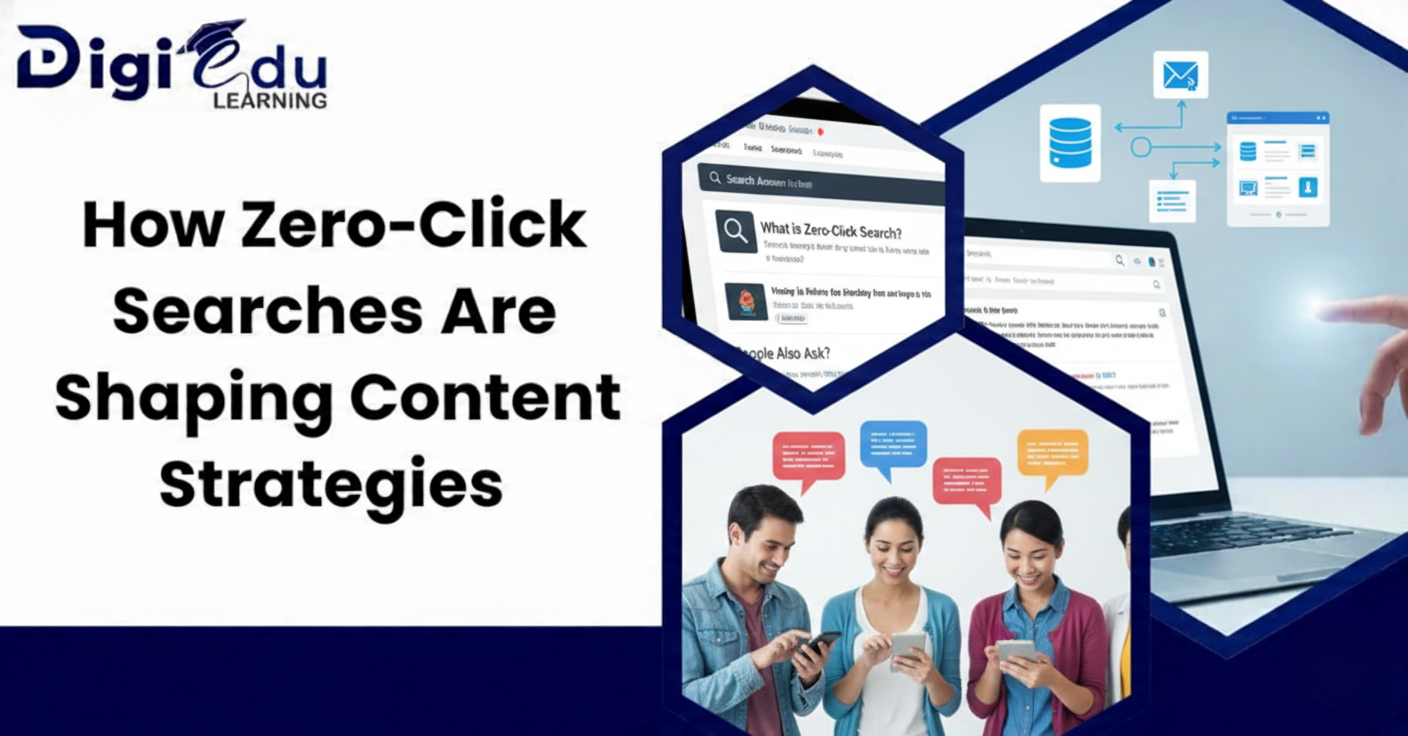
The search behavior has been transformed drastically in recent years. Users are demanding faster solutions where they do not have to scroll through numerous websites to find the answers they are seeking. The search engines are currently designed to provide concise and direct information in the form of featured snippets, knowledge panels, frequently asked questions, and artificial intelligence-generated summaries right on the search page.
Consequently, there has been a prevailing tendency of the so-called zero-click searches, in which the user does not open a site but rather accesses some information that he or she requires. Such a change is altering the manner in which brands are dealing with visibility, authority, and engagement in content marketing.
Why Zero-Click Searches Demand a New Content Marketing Approach
Zero-click searches question the time-honored objective of traffic generation only. Rather, content marketing has been shifted towards visibility, brand recall, and authority on the search engine result pages. The marketer needs to accommodate by organizing information to fulfill search intent immediately, yet motivate further interaction.
This development demands a tactical combination of search engine optimization, user experience, and brand positioning. These are the main ways in which the zero-click searches are changing content marketing strategies.
Optimizing for Featured Snippets and Direct Answers
One of the most popular types of zero-click searches is featured snippets. Search engines are designed to siphon out accurate answers to well-organized content, which are placed at the top of the results.
To get a better chance of being chosen for such a high position, content marketers have to structure their content in a way that helps to answer questions in a straightforward and brief manner.
Strategic Actions Include:
- Composing clear and straightforward answers to frequent queries by users.
- Extraction is easy with headings, lists, and brief paragraphs.
- Aiming at question-based and long-tail keywords.
Structuring Content for Search Intent Satisfaction
Search intent matching and understanding have become a key issue in a zero-click platform. Consumers can be in search of definitions, comparisons, steps, or shortcut information other than prose.
The content must be designed in a manner that provides instant gratification and, at the same time, provides further insight to those users who will continue to dig deeper.
Key Considerations Include:
- Standardizing content formats for informational, navigational, or transactional purposes.
- Providing the most important conclusions at the beginning of the material.
- Providing brief outlines and then explaining.
Leveraging Schema Markup and Structured Data
Formatted data assists search engines in comprehending information more efficiently, which raises the chances of being selected in rich results like commonly asked queries, how-to guides, and review snippets.
Using schema markup, brands are more visible, even when a user does not click the website.
The Advantages of Structured Data are
- Increased ranking in the rich results.
- Better search engine optimization.
- Bigger brand credibility and authority.
Building Brand Authority Beyond Clicks
Brand exposure is important in a zero-click environment since it ranks equally with visits to websites. It creates trust and recognition even in cases where the user does not click on the repeated presence in search results.
The Content marketing should be aimed at establishing the brand as a factual information source throughout the search engines.
The Strategies Involved in Authority-Building Include:
- Regular brand communication in snippets and summaries.
- Producing quality expert material.
- Being topically relevant and in-depth.
Adapting Content Formats for SERP Features
The features incorporated in modern search results consist of knowledge panels, People Also Ask boxes, image carousels, and AI overviews. The content has to be optimized to suit such formats.
The variety of content presentation can assist the brands to be visible in several components of the SERP.
Successful Adaptation of Content Entails:
- Development of FAQ-type areas in articles.
- Applying short definitions and bullets.
- The usage of visuals and multimedia.
Measuring Success Beyond Traffic Metrics
Conventional subscription measurements such as page views and sessions are no longer adequate measures of content performance. Zero-click searches can only be measured using a wider strategy.
The marketers should concentrate on visibility, impressions, and brand engagement indicators instead of concentrating on clicks.
The key Performance Indicators are:
- Search impressions and visibility of keywords.
- Appearance of the featured snippet and rich results.
- Recollection of the brand and facilitated conversions.
Aligning Content with Voice Search and AI Responses
Zero-click answers are frequently used by voice assistants and AI-driven search experiences. In these queries, content is optimized to be used when a person uses a conversational query, and natural language is more likely to be used in such a response.
The fit is such that brands are not left behind since search is still changing to an AI-driven experience.
Such Methods of Optimization are
- Headings and the use of conversational language and questions.
- Give brief and precise answers to frequent questions.
- Formatting information to be retrieved by AI machines.
Encouraging Engagement Beyond the SERP
Although the visits to the websites decrease with zero-click searches, marketers can create a way of engagement by providing value on top of the first answer.
Good calls to action and interesting content hooks persuade users to read more when they require in-depth information.
Strategies Based on Engagement Involve:
- Focusing on special value propositions.
- Providing downloadable materials or applications.
Integrating Zero-Click Strategy with Omnichannel Marketing
The concept of zero-click visibility must be consistent with general digital marketing activities. Brand presence is boosted by consistent messaging, whether on search, social media, email campaigns, or paid campaigns.
This combined strategy will make sure that the user is exposed to the brand on multiple platforms, building on memory and confidence.
The Advantages of Integration are
- Enhanced channel consistency concerning the brand.
- Greater alignment of the user journey.
- Increased long-term interaction and conversions.
Conclusion
Zero-click searches do not pose a threat but are an evolution of the way in which users access information on the internet. They challenge content marketers to be more attentive to clarity, authority, and strategic visibility, and not be concerned with traffic generation alone. Brands that change to search feature optimization, structured data, and content that is intent-driven will not be left behind in the shift.At Digi Edu Learning, we assist businesses to reevaluate their content marketing approaches in the zero-clicks age by making search-optimized, brand-oriented content that provides value on and off the search results page, which guarantees long-term digital expansion and presence.
Popular News


Our Partners





Leave a Reply