



How Marketing Teams Are Using AI to Reduce Campaign Burnout
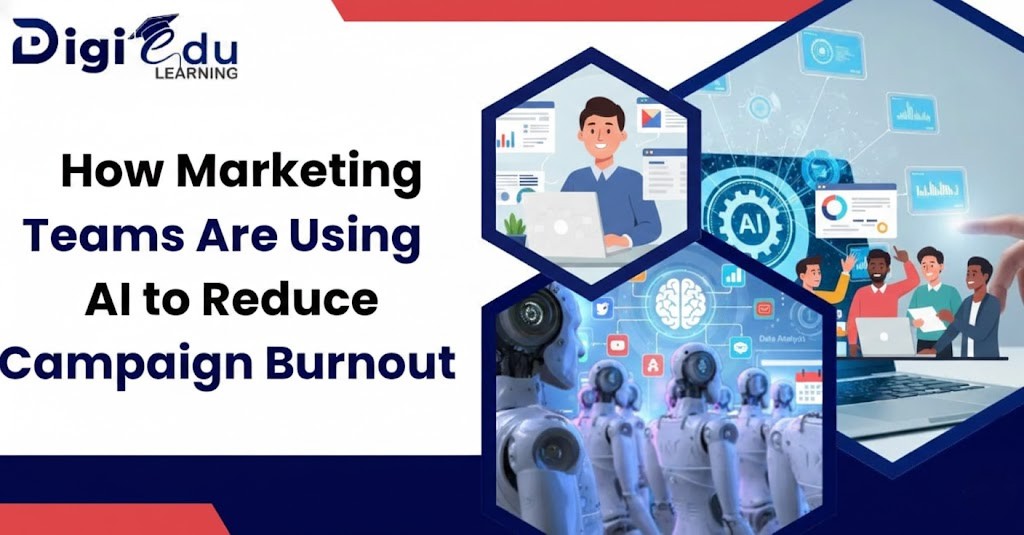
In 2026, one of the problems facing the marketing team has been campaign burnout. Marketers are under pressure due to the demands of incessant deadlines, dozens of platforms to coordinate, performance pressure, and the need to achieve tangible ROI. The prolonged working hours, monotonous work, and intellectual exhaustion not only decrease productivity but also affect creativity and decision-making. This is the place where artificial intelligence is altering how marketing teams should work. Through automation of repetitive tasks, enhanced accuracy in planning, and operational stress, AI teams are assisted in finding balance as well as achieving superior campaign outcomes. Among the most significant changes, there is the growing responsiveness of AI in marketing burnout management as a strategic priority (as opposed to an afterthought).
Why Campaign Burnout Is Rising in Modern Marketing
Marketing is not about the creation of content or the execution of a campaign anymore. The teams are supposed to handle information, optimize real-time performance, individualize customer experiences, and coordinate activities across channels in tandem. This complication usually results in burnout and inefficiency. Knowing the causes of burnout underlies the reason why AI in marketing burnout solutions are increasingly mandatory and not optional.
Increasing Channel Complexity
Websites, social media, paid ads, email, analytics, and automation tools are now all under the marketing teams. The transition between platforms is time- and mind-consuming; thus, burnout becomes quicker.
- Operating a variety of dashboards in a day.
- Constant pressure of optimization.
- Real-time monitoring of performance.
Repetitive and Manual Tasks
Although they are strategic positions, marketers continue to use hours of their time on manual activities, including reporting, scheduling, data entry, and content formatting. Such activities contribute very minimal value in terms of creativity but consume a lot of energy.
- Analytics and manual reporting.
- Formatting of content repetitions.
- Campaign setup duplication
Always-On Performance Expectations
Marketers are subjected to the pressure to increase metrics in real time with real-time analytics and instant feedback. This causes strain and decreases the time taken to recover between campaigns.
- Performance assessment on a daily basis.
- Instant optimization requires
- Minimal time between launches.
How AI Is Redefining Workflows to Prevent Burnout
Marketers are not being replaced by AI, but rather it works as a support that will eliminate the friction of day-to-day activities. Intelligence and reuse of repetitive tasks enable AI to enable teams to concentrate on strategy, creativity, and innovation. This is the change that is central to the way AI in marketing burnout prevention is transforming campaign management.
Automation of Repetitive Marketing Tasks
With the help of AI-based automation tools, scheduling, reporting, lead scoring, and follow-ups require little human intervention. This goes a long way in decreasing the workload and mental exhaustion.
- Scheduling of campaigns automatically.
- Reporting of performance in real time.
- Dumb lead management systems.
Faster Content Creation and Optimization
Artificial intelligence writing tools are used to create the draft, refine headlines, and cross-platform content repurposing. This minimizes production cycles and minimizes production fatigue.
- Faster content ideation
- SEO-optimized drafts
- Multi-platform reuse of content.
Predictive Analytics for Smarter Planning
AI can predict the performance of the campaigns by analyzing previous data, enabling teams to make more precise decisions and avoid the last-minute rush.
- Prediction models of performance.
- Budget allocation insights
- Minimization of risks during campaign planning.
AI-Powered Tools That Reduce Mental Load on Marketers
One of the best ways in which the marketing teams are fighting burnout is through the adoption of smart tools. AI in marketing burnout management is viable and scalable since these tools make it easier to decide and minimize cognitive load.
Intelligent Project and Workflow Management
Artificial intelligence project applications are task-centric, will create achievable schedules, and highlight bottlenecks before they transform into an issue.
- Automated prioritization of tasks.
- Deadline optimization
- Team workload balancing
Smart Personalization Engines
Customer segmentation and personalization are performed automatically by AI, which does not require manual customer targeting and continuous changes.
- Dynamic segmentation of the audience.
- Rules of personalization that are automated.
- Delivery of content through behavior.
Artificial Intelligence-Based Reporting and Insights
Marketers are not expected to analyze dashboards manually but rather get actionable insights from AI systems.
- Streamlined performance reports.
- Insight generation is automated.
- Crunching, not data crunching.
How AI Improves Team Collaboration and Reduces Stress
Workload is not the only cause of burnout, but also poor collaboration and mismatched expectations. AI tools enhance coordination, clarity, and transparency among the teams, which makes AI in marketing burnout prevention a team advantage.
Specific Role Distribution and Responsibility
Tools that operate using AI can allocate tasks according to their abilities and time to eliminate confusion and repetition.
- Distribution of tasks according to skills.
- Engineer ownership of deliverables.
- Reduced internal friction
Real-Time Collaboration Support
Joint dashboards and reports generated by AI make sure that no one has to attend meetings all the time.
- Centralized communication
- Automated progress updates
- Reduced meeting overload
Equalized Workload Distribution
AI evaluates the workloads and inhibits overworking of particular team members.
- Workload monitoring
- Fair task distribution
- Improved team morale
The Long-Term Impact of AI on Marketing Well-Being
Other than short-term improvements in efficiency, AI will make marketing sustainable. The integration of AI in marketing burnout solution teams leads to higher levels of job satisfaction, creativity, and long-term stability in performance.
Increased Innovativeness and Tacticality
This will enable the marketers to concentrate on innovative thinking and long-term strategy when stress levels of operations are minimized.
- More time for brainstorming
- Better campaign creativity.
- Better brand narration.
Healthier Work-Life Balance
Automation minimizes overtime and last-minute rush, enabling the marketers to disconnect and rest.
- Fewer deadlines at night.
- Predictable workflows
- Better personal well-being.
Higher Retention and Team Stability
Well-utilized teams with AI will record lower burnout rates and elevated rates of employee retention.
- Reduced turnover
- Stronger team engagement
- Sustainable performance culture.
Why Learning AI-Driven Marketing Is Essential in 2026
Marketers who know how to collaborate with AI have a great opportunity. Not only do they achieve better results, but they also guard themselves against burnout. The ability to learn AI in the marketing burnout prevention methods is becoming a vital professional skill.
Job Market Competitive Advantage
Marketers who are AI-literate are more effective, tactical, and strong under pressure.
- Higher employability
- Increased leadership capacity.
- Stronger career growth
Smarter Career Sustainability
Being aware of the way to outsource the work to AI is the way to be productive in the long term and not to run out of energy.
- Less dependence on manual labor.
- Future-proof skill sets
- Both professional development and work-life balance.
Conclusion
Through repetitive task automation and enhancement of teamwork, better planning precision, and alleviation of cognitive burdens, AI allows the teams to remain creative without becoming exhausted. Modern marketers no longer have the choice but to achieve sustainable success by using strategically AI in marketing burnout prevention. Professionals at Digi Edu Learning will be trained to operate AI-enabled marketing tools and processes by engaging in practical, skills-based learning, which will allow them to create high-performance campaigns and, at the same time, sustain long-term well-being and career development.
Popular News

Our Partners





Leave a Reply