
Why Video Editing Is One of the Fastest-Growing Creative Careers
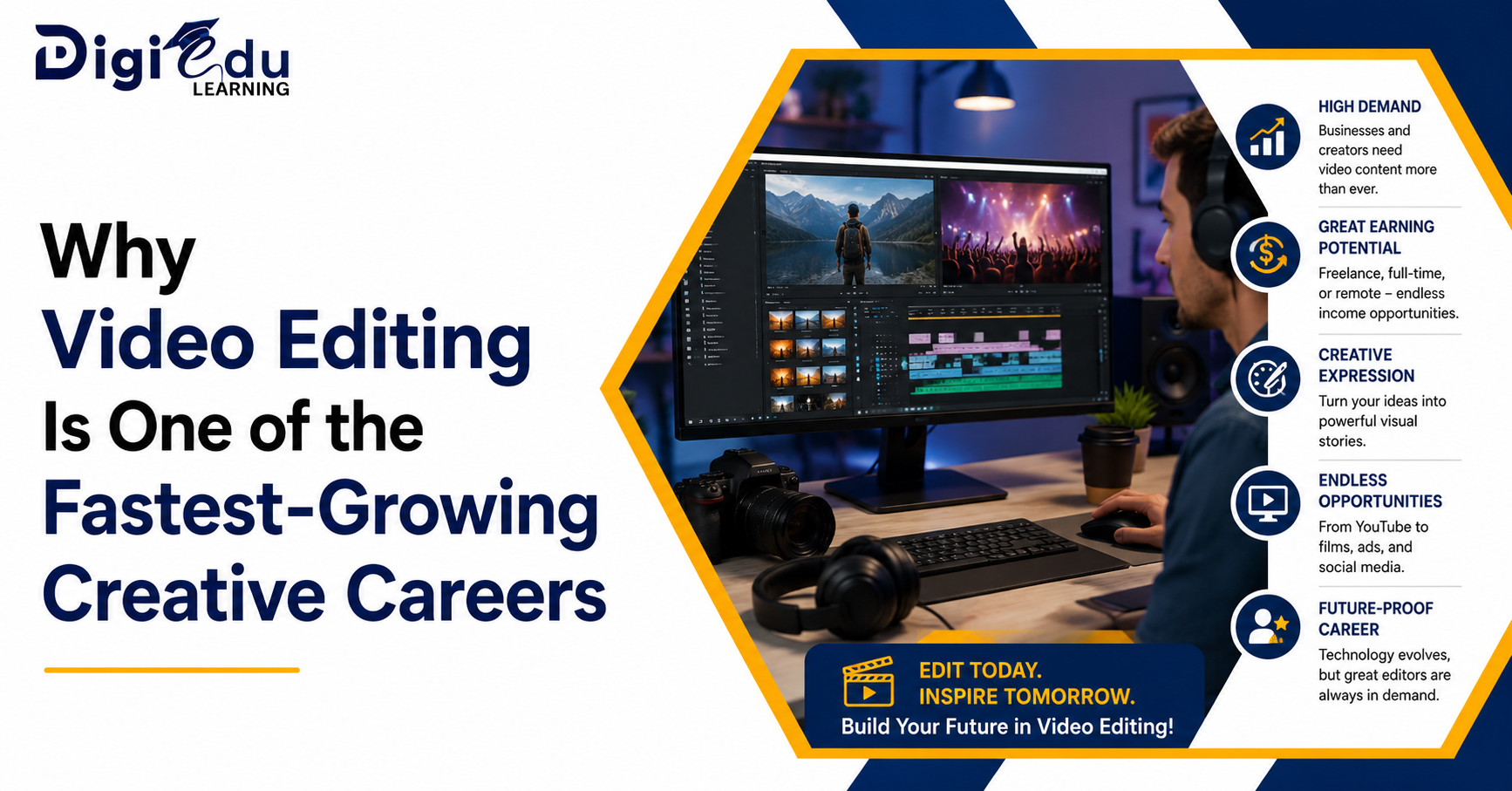
Browse through YouTube, Instagram, Netflix, LinkedIn, or even your favorite online shopping portal, and you’ll see that there is one common element to all these—YouTube videos. All brands, influencers, educators, businesses, and organizations are fighting to grab people’s attention with visually appealing video content. And every great video comes from an equally talented editor who makes great videos out of their raw footage.
The rising need for video editors has made this profession one of the most promising career choices for many creatives out there. This is because no matter what someone is aspiring to do- entertainment, advertising, social media marketing, education, or freelance this can help them in many ways.
Industry Insight
Why Video Editing Has Become One of the Most In-Demand Jobs? There has been an enormous rise in digital content consumption over the last ten years. Companies have started investing significantly in video content as audiences have been seen to interact more with video than written text and other forms of imagery. From product showcases to educational courses, and from corporate presentations to social media marketing, video has turned out to be a crucial medium of communication.
With the advancement of artificial intelligence, the internet, and telephone technology, there is even a greater demand for skilled video editors. The creativity of editing and the emotional quotient cannot be achieved through AI editing.
The above factors have made video editing a job opportunity that has transcended from film houses and TV networks. Some of the areas where video editors are employed today include:
- Digital marketing agencies
- YouTube channels
- OTT platforms
- E-commerce brands
- Educational institutions
- Healthcare organizations
- Corporate businesses
- Media production houses
- Advertising agencies
- Freelance marketplaces
The ability to create engaging visual content has become a business necessity rather than a luxury.
The Rise of the Creator Economy Is Expanding Career Opportunities
The creator economy has transformed the employment landscape for video professionals. Thousands of creators, coaches, startups, and businesses publish videos daily, creating continuous demand for editors who can deliver high-quality content quickly.
Unlike many traditional professions, a video editing career offers multiple income opportunities. Professionals can work full-time, freelance, consult independently, or establish their own creative agencies.
Popular career paths include:
- Video Editor
- Motion Graphics Designer
- YouTube Video Editor
- Social Media Video Editor
- Film Editor
- Corporate Video Specialist
- Advertising Video Editor
- Post-Production Executive
- Multimedia Content Creator
- Freelance Video Editor
This flexibility allows professionals to choose careers based on their interests, preferred work style, and long-term goals.
Expert Commentary
What Skills Separate Professional Video Editors from Beginners?
Industry professionals agree that successful editors do much more than cut video clips together. They understand storytelling, audience psychology, branding, timing, and visual communication.
Building a successful video editing career requires both technical expertise and creative thinking.
Professional editors recommend developing skills in:
- Storytelling techniques
- Video sequencing
- Audio synchronization
- Color correction
- Motion graphics
- Visual effects
- Typography
- Sound design
- Client communication
- Project management
Editors should also become proficient in leading software platforms such as Adobe Premiere Pro, After Effects, DaVinci Resolve, Final Cut Pro, and emerging AI-assisted editing tools.
Beyond software knowledge, creativity, attention to detail, and the ability to understand client objectives often determine long-term success.
Why Practical Experience Matters More Than Certificates
Recruiters increasingly evaluate portfolios rather than certificates alone. A strong collection of real projects demonstrates creativity, technical capability, and problem-solving skills more effectively than theoretical qualifications.
Experienced professionals recommend working on:
- Personal creative projects
- Social media campaigns
- YouTube videos
- Brand advertisements
- Short documentaries
- Event videos
- Client assignments
- Internship projects
Every completed project strengthens an editor’s portfolio and increases confidence when applying for jobs or freelance opportunities.
A combination of practical experience, continuous learning, and adaptability enables professionals to build a sustainable video editing career in an industry that continues to evolve rapidly.
Proof & Real-World Perspective
Video Content Is Powering Every Modern Industry
One of the strongest indicators of the industry’s growth is how widely video is used today. Businesses no longer create videos only for television advertisements or promotional campaigns. They rely on video to educate customers, train employees, explain products, build trust, and increase engagement across digital platforms.
For example:
- An e-commerce company creates product demonstration videos to improve sales.
- A healthcare organization publishes educational videos to spread awareness.
- A real estate firm uses cinematic property tours to attract buyers.
- Educational institutions record online lectures and promotional content.
- Restaurants and cafés produce short social media videos to reach local audiences.
- Startups use explainer videos to present their products to investors and customers.
In each of these scenarios, skilled video editors play an essential role in delivering content that looks professional, communicates clearly, and captures audience attention.
This widespread adoption demonstrates why a video editing career offers opportunities far beyond the entertainment industry.
Freelancing Has Changed the Career Landscape
Another major reason video editing continues to grow is the rise of freelance work.
Businesses around the world frequently hire independent editors for project-based assignments instead of maintaining large in-house production teams. This allows skilled professionals to work with clients across different countries while enjoying greater flexibility.
Many successful editors eventually transition into:
- Freelance businesses
- Creative agencies
- YouTube production teams
- Corporate media departments
- Independent content studios
With a strong portfolio and consistent quality, a freelance editor can build long-term client relationships and create multiple income streams.
Analysis
Why Video Editing Will Remain Valuable Even as AI Evolves
Artificial Intelligence has introduced tools that automate repetitive editing tasks, including scene detection, caption generation, audio enhancement, and background removal. While these technologies improve efficiency, they do not replace human creativity.
Successful editors contribute elements that AI cannot fully replicate, including:
- Storytelling
- Emotional pacing
- Creative decision-making
- Brand consistency
- Audience understanding
- Visual aesthetics
The future belongs to professionals who combine AI-powered tools with creative expertise rather than relying on either one alone.
Benefits of Building a Video Editing Career
- High demand across multiple industries
- Opportunities for freelancing and remote work
- Creative and rewarding profession
- Continuous learning and career growth
- Global employment opportunities
- Ability to work with brands, influencers, agencies, and production houses
- Strong earning potential as experience increases
Common Challenges
Like any creative profession, video editing also comes with responsibilities.
Students should prepare for:
- Tight project deadlines
- Frequent software updates
- Changing client expectations
- Continuous skill development
- Managing multiple revisions
Professionals who embrace learning and adapt to new technologies generally build stronger long-term careers.
Recommendations
How to Start Building a Successful Video Editing Career
Students interested in pursuing a video editing career should focus on developing practical experience alongside technical knowledge.
Learn Professional Editing Software
Master industry-standard tools such as:
- Adobe Premiere Pro
- Adobe After Effects
- DaVinci Resolve
- Final Cut Pro
- Adobe Audition
Build a Strong Portfolio
Employers and clients prefer to see completed work rather than only certificates.
Include projects such as:
- Short films
- Product videos
- Social media reels
- Corporate presentations
- YouTube content
- Motion graphics
- Event highlights
Stay Updated
Video trends evolve quickly.
Follow developments in:
- AI-assisted editing
- Motion graphics
- Visual effects
- Vertical video formats
- Short-form content
- Interactive media
Develop Soft Skills
Creative professionals also benefit from:
- Communication
- Time management
- Client handling
- Creativity
- Collaboration
- Problem-solving
These skills improve both career progression and client satisfaction.
Closing Thoughts
The digital economy has transformed video into one of the most powerful communication tools available today. Businesses, creators, educators, and organizations increasingly depend on high-quality visual storytelling, making a video editing career one of the most promising creative professions for the future. While technology will continue to evolve, creativity, strategic thinking, and storytelling will remain irreplaceable qualities that skilled editors bring to every project.
For students looking to build practical expertise and prepare for opportunities in media, marketing, freelancing, and content creation, choosing the right learning environment is essential. Digi Edu Learning helps aspiring professionals develop industry-ready video editing skills through practical training, live projects, and expert mentorship, enabling them to confidently pursue successful careers in the rapidly growing digital content industry.
Popular News



Our Partners